

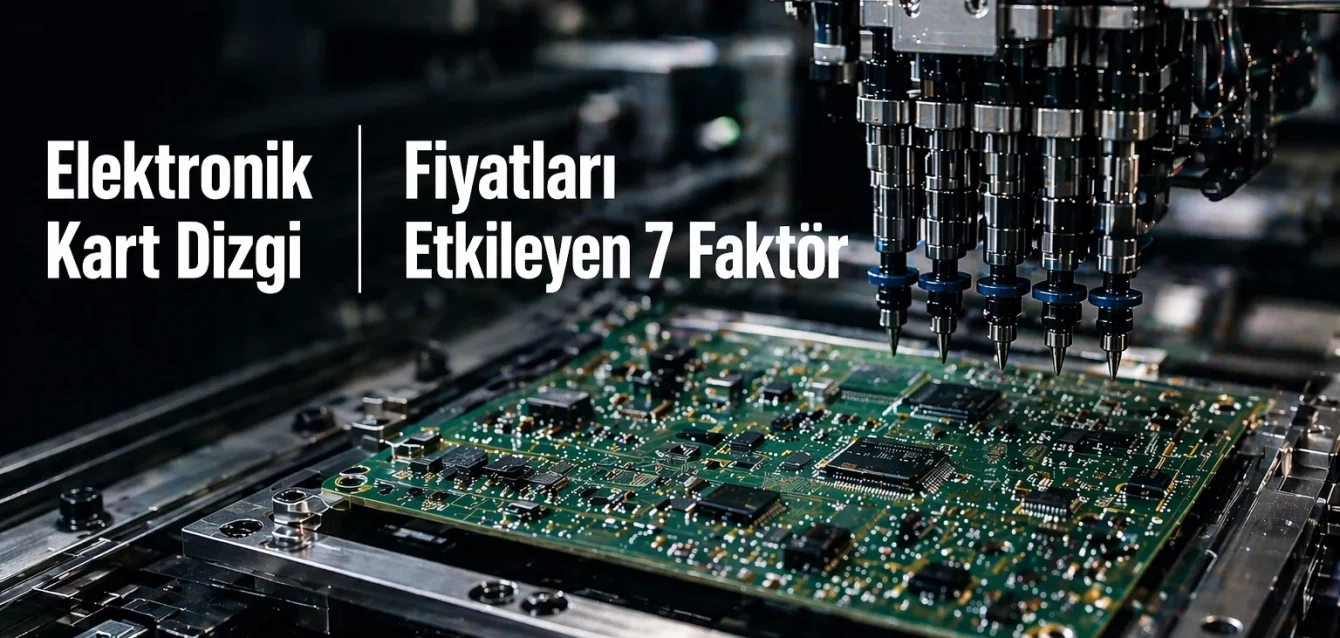
It is not possible to talk about a single standard when it comes to electronic card typesetting prices. The same PCB design there can be significant differences between offers from different manufacturers. This is because the price depends on many technical and operational variables.
First of all, the size and structure of the electronic board forms the basis of the cost. Larger or multilayer PCBs require more resources in both the production and typesetting process. This is directly reflected in the prices. Especially with multilayer PCBs, the process is not just about typesetting; manufacturing complexity also comes into play.
Another important factor is the number and type of components. The more components on the board, the longer the typesetting time. In addition, precision packages such as BGA or QFN require more advanced manufacturing capabilities than standard components and increase cost.
The type of board typesetting is also a determining factor on price. While SMD board typesetting is more advantageous in high-volume production thanks to automation, THT typesetting can be costly as it usually involves manual labor. If both technologies are used in the project, i.e. mixed typesetting, the pricing is calculated in more detail.
The number of production units is perhaps the most critical factor. In low volume production, installation costs are reflected more per unit. However, as the number increases, these costs are distributed and the unit price drops significantly. For this reason, it is quite normal to see large price differences between prototype production and mass production.
The type of solder and materials used should also not be overlooked. Different furnace profiles and materials are used in projects that require lead-free production (RoHS). Who supplies the components also affects the price. There can be a significant difference between the manufacturer supplying all the material and the customer supplying it.
Quality control processes are also an important part of the cost. While additional checks such as AOI, ICT or functional testing may seem to increase costs at first glance, they actually save money in the long run as they reduce the risk of defective production. These processes are usually standard in professional PCB board typesetting services.
Last but not least, lead time also has an impact on the price. In case of urgent production requests, the production plan has to be rearranged, which creates additional costs. With more flexible deadlines, prices are usually more optimized.
To summarize, electronic board typesetting prices are not fixed, but completely project-based. Therefore, the best approach is not only to make price comparisons, but also to evaluate the scope of the service offered, the quality level and technical competence together. Working with the right PCB board typesetting partner not only keeps costs under control, but also ensures that your product goes to market more smoothly.
Electronic card typesetting Planning your process correctly makes a big difference in terms of cost and quality. Share your PCB with us, We will send you a customized SMD typesetting and production offer as soon as possible.