

One of the most common challenges in electronic product development and manufacturing processes is the procurement of electronic components. Due to global supply chain issues, semiconductor shortages, and manufacturer-related inventory problems—particularly in recent years—many companies are struggling to obtain the parts they need on time.
Once a circuit board design is complete, all components must be procured in full before moving on to the production phase. However, sometimes even the unavailability of a single integrated circuit, microcontroller, or passive component can bring the entire production process to a halt. In such cases, one of the most effective methods companies turn to is the use of equivalent electronic components.
So, what is an equivalent component, how do you find one, and what should you keep in mind when selecting one?
What Is an Equivalent Electronic Component?
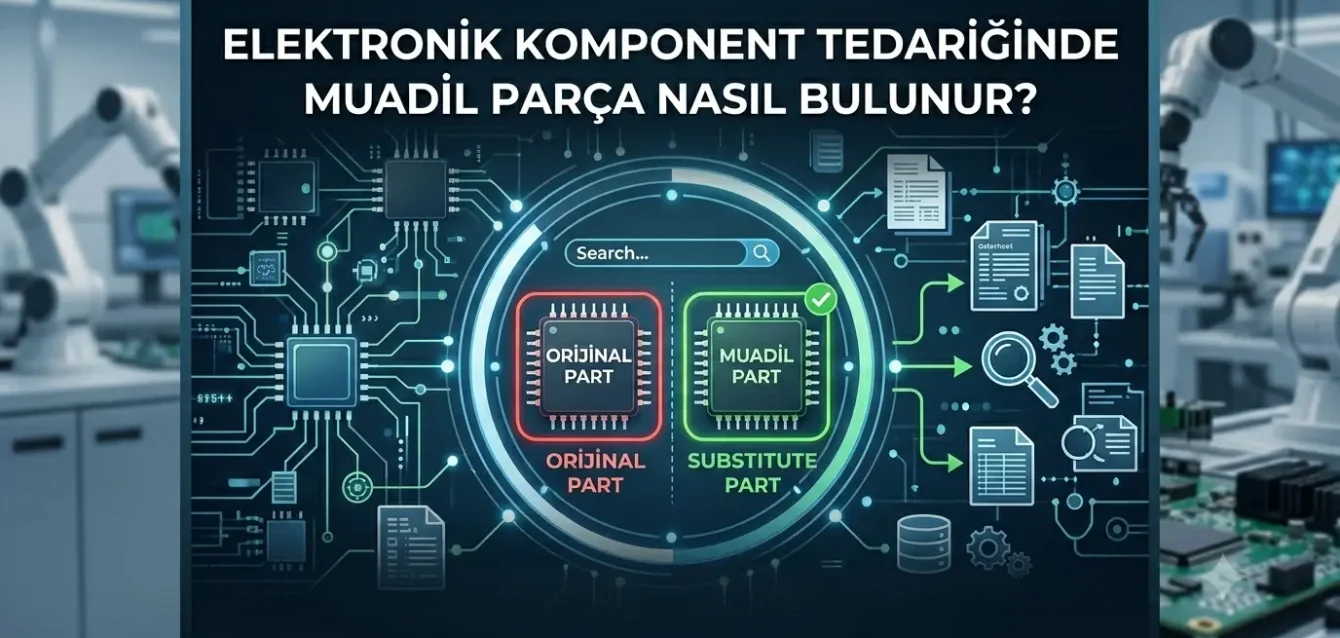
Equivalent electronic components are alternative electronic components that can be used in place of the original part and have the same or similar technical specifications. These components may be manufactured by different manufacturers but are designed to fulfill the basic functions required by the system.
For example, if a voltage regulator used in production is out of stock, a product from another manufacturer with the same input and output values, similar current capacity, and compatible package design may be selected.
A properly selected equivalent component ensures that production can continue without affecting product performance. However, incorrect choices can lead to the need for board design revisions, performance losses, and even field failures.
Why Is There a Need for Replacement Parts?
In the electronics industry, component replacement isn’t just an issue when there’s a stock shortage. In some cases, manufacturers may discontinue certain product lines or transition to new-generation products. When this happens, the search for alternatives to components that have been in use for many years begins.
In addition, longer lead times are another significant factor. For some electronic components, lead times can stretch to weeks or even months. These waiting periods can result in significant costs, particularly for companies engaged in mass production.
Cost optimization is also one of the common reasons for using equivalent components. If there is a price advantage among different brands that offer similar performance, manufacturers may opt for alternative products.
What Should You Consider When Selecting Equivalent Components?
When selecting equivalent electronic components, it is not enough to look only at the part number. A detailed comparison of the technical specifications is required.
First, it is important to examine the electrical parameters. The operating voltage, current capacity, power consumption, frequency values, and tolerance ranges must be checked. Even minor variations in these values can affect system performance.
Package type and pin configuration are also critical considerations. In particular, when sourcing SMD components, it is common for products with the same function to be available in different packages. If an alternative product does not physically fit the existing PCB design, additional engineering work may be required.
Environmental working conditions must also be evaluated. In products used in industrial applications, heat resistance, moisture tolerance, and long-term reliability play a significant role.
Why Is a Datasheet Comparison Important?
Manufacturer datasheets are the most important resource when selecting equivalent components. Identifying alternatives based solely on a part’s product code can pose serious risks.
When reviewing a datasheet, you should compare the electrical characteristics, pin configuration, operating temperature, mechanical dimensions, and recommended application circuits.
Companies that offer professional component procurement services not only manage inventory but also provide engineering support to help identify suitable alternative products.
This process is of critical importance, especially in complex electronic circuit board projects.
The Importance of Alternative Components During a Chip Shortage
The global chip shortage that followed the pandemic led to major changes in the electronics industry. Many manufacturers were unable to source the microcontrollers, processors, and power management ICs they needed for months.
During this period, alternative parts management enabled many companies to continue production. Since similar risks persist today, many manufacturers are developing secondary sourcing strategies during the design phase.
When developing a product, identifying alternative sources in advance—rather than relying solely on components from a single manufacturer—significantly reduces supply risks.
Management of Equivalent Parts in Electronic Circuit Board Manufacturing
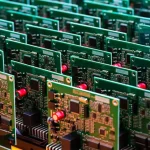
Component continuity is of great importance in electronic circuit board assembly and mass production processes. A PCB may contain hundreds or even thousands of different components. The absence of even a single one of these components can cause the entire production line to come to a halt.
For this reason, professional manufacturers create lists of alternative products for critical components as part of their BOM (Bill of Materials) management. This ensures that production processes are minimally disrupted in the event of any supply issues.
Especially in electronic circuit board assembly projects, collaboration between component suppliers and engineering teams provides significant benefits in terms of both cost savings and production continuity.
Why Is a Reliable Electronics Parts Supplier Important?
Selecting equivalent products is not merely a technical process. It also requires reliable supply chain management.
Thanks to authorized distributors and reliable electronic component suppliers, companies can protect themselves from the risks associated with counterfeit products. The use of counterfeit products—particularly in integrated circuits and semiconductors—can lead to serious quality issues.
For this reason, when sourcing components, it is important to consider not only price but also product traceability, manufacturer approval, and technical support options.
Conclusion
Delays in the supply of electronic components and inventory issues are among the most significant challenges facing today’s manufacturing processes. By selecting the right equivalent electronic components, production continuity can be maintained, costs can be optimized, and supply risks can be reduced.
However, it is important to remember that the equivalent selection process involves more than just matching product codes. Technical analysis, datasheet comparisons, and engineering evaluations are critical to achieving successful results.
If you need expert support in the processes of electronic circuit board manufacturing, component procurement, or identifying equivalent parts, You can contact the Elektroent team. By working together to evaluate component solutions tailored to your project, you can ensure that your production processes continue without interruption.