

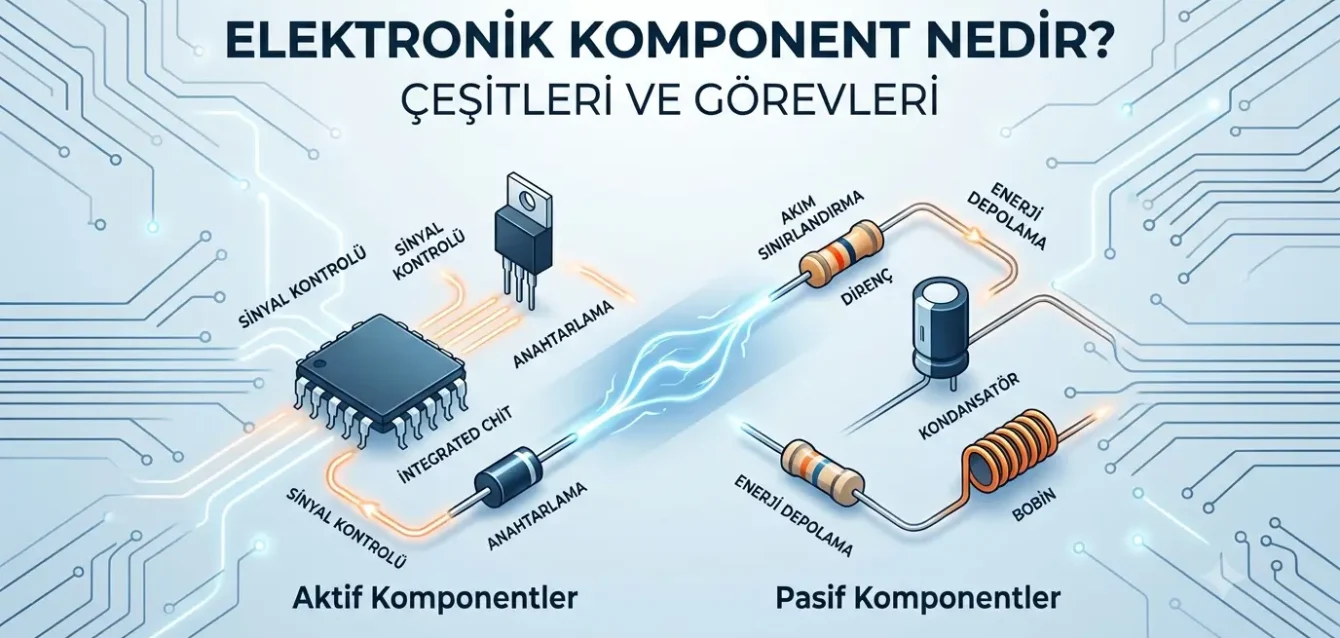
Electronic components are the basic parts that make up electronic circuits and enable the control of electric current. All the electronic devices we use in our daily lives—from phones to computers, and from home appliances to industrial systems—function through the combination of these electronic components, each of which performs a different task. Electronic components ensure that circuits operate correctly and stably by performing functions such as routing, regulating, amplifying, or storing electrical signals.
What Is an Electronic Component?
Electronic components are passive or active circuit elements that perform a specific function within an electronic circuit. While these components do not perform a meaningful function on their own, they work together with other electronic elements within a circuit to form the entire system. Thanks to electronic components, electrical energy can be controlled, and desired operations can be carried out.
The Basic Principles of How Electronic Components Work
The operating principle of electronic components is based on the controlled direction of electric current. Each component within a circuit contributes to the proper functioning of the system by altering the amount, direction, or behavior of the current. For example, some components limit the current, while others store energy, and still others amplify signals or perform switching operations.
Types of Electronic Components
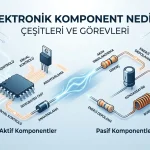
Electronic components are generally divided into two main groups: active and passive. This classification is based on whether the component contributes energy to the circuit.
Passive electronic components are elements that do not generate energy in a circuit but direct or store electric current. Resistors, capacitors, and inductors belong to this group. Resistors ensure the safe operation of a circuit by limiting current, while capacitors temporarily store electrical energy and are used in filtering applications. Inductors, on the other hand, create a magnetic field and serve the functions of energy storage and signal filtering.
Active electronic components, on the other hand, are components that can supply power to a circuit and control signals. Transistors, diodes, and integrated circuits fall into this category. While transistors are used for signal amplification and switching, diodes allow current to flow in only one direction. Integrated circuits, on the other hand, combine many electronic functions into a single structure, forming the foundation of modern electronic systems.
Functions of Electronic Components
The most basic function of electronic components is to control the flow of electric current, ensuring that the circuit operates as intended. This control ensures that energy is directed to the right places, the system is protected, and efficient operation is maintained. In addition, some electronic components also perform more advanced functions such as signal processing, data transmission, power management, and frequency control.
Applications of Electronic Components
Electronic components have a very wide range of applications today. They play a critical role in many fields, such as consumer electronics, the automotive sector, healthcare technologies, the defense industry, communication systems, and industrial automation. Smart devices, IoT systems, and modern manufacturing technologies all rely entirely on these components being properly integrated.
The Importance of Electronic Components
With advances in technology, electronic components have become smaller, more efficient, and more powerful. This progress has both improved device performance and reduced energy consumption. Today, electronic components are recognized not merely as circuit elements but as the fundamental building blocks of modern technology. Selecting the right components is one of the most important factors directly determining the success of an electronic system.
Conclusion
Electronic components are the critical building blocks that form the foundation of modern technology and enable the operation of nearly all electronic systems. From simple circuits to complex industrial systems, they perform various functions across all fields, making our lives easier. Choosing the right electronic components is of great importance in terms of both performance and reliability.
If you, too, need high-quality electronic components for your project or manufacturing needs, You can contact us to receive expert support and discover the best solutions.