

The terms PCB and PCBA are often used together in electronic manufacturing processes. However, many people think that these two terms are the same. However, PCB and PCBA refer to two different stages of electronic board production.
Knowing this difference is especially important for startups developing products, companies producing electronic devices and companies that will receive card typesetting services. Because the needs, costs and delivery expectations in the production process vary according to these stages.
In this article, we explain in a simple way what PCBA is, the differences between it and PCB and its place in the electronic board manufacturing process.
What is PCBA?
PCBA stands for “Printed Circuit Board Assembly”. Its Turkish equivalent is printed circuit board assembly.
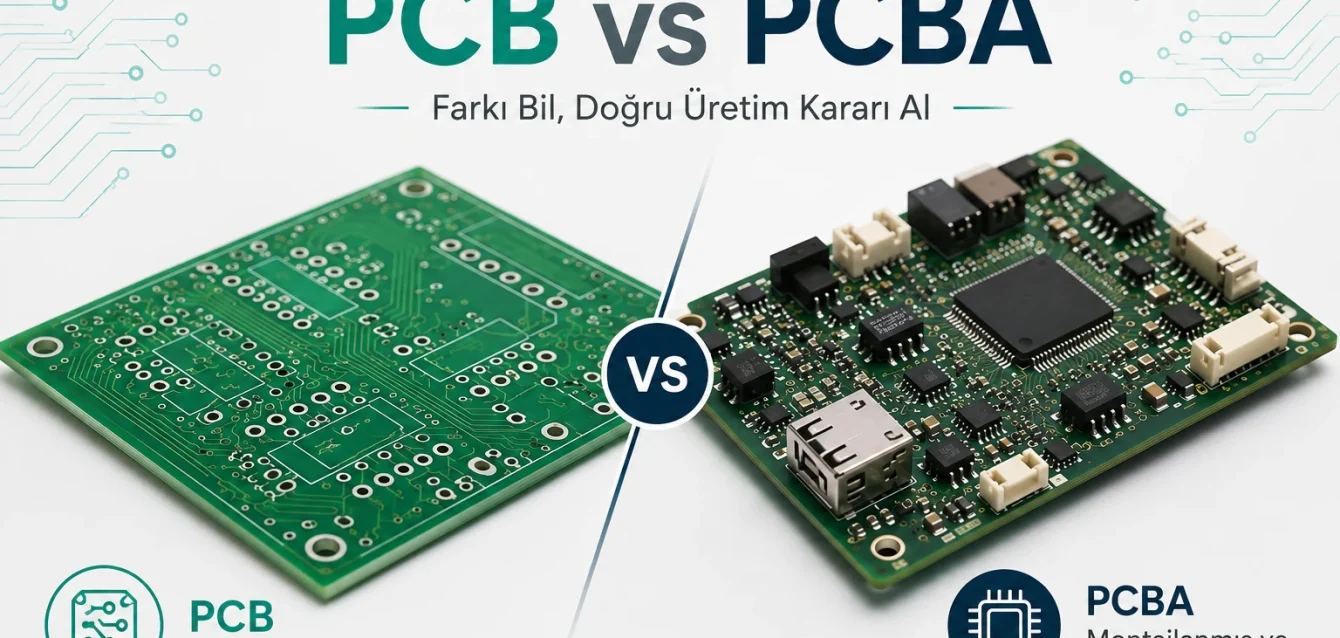
To put it briefly, PCBA is the placement and soldering of electronic components on a blank PCB. In other words, it refers to the electronic board in working condition.
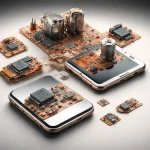
A PCB is not functional on its own. It cannot perform any electronic task without the presence of processors, resistors, capacitors, integrators, connectors and other electronic components. With the placement of these components and the completion of the assembly process, the board becomes a PCBA.
The phones, industrial devices, medical equipment, automotive systems and IoT products we use today all have PCBAs. (ET)
What is a PCB?
The PCB, or Printed Circuit Board, is the blank version of the electronic board. It contains only copper vias, pads and circuit design.
The main task of the PCB is to create a physical carrier and electrical connection infrastructure for electronic components. However, since there are no components on it, it is not a stand-alone electronic product.
The electronics manufacturing process usually starts with PCB production. Components are then placed on the board and the assembly process begins.
What is the Difference Between PCB and PCBA?
The basic difference between PCB and PCBA is actually quite simple.
A PCB is a blank circuit board on which no components have yet been placed. The PCBA is the version of this board on which all electronic components have been mounted and made operational.
It is possible to think of this with the example of a building. The PCB is only the rough structure of the building. PCBA, on the other hand, represents the structure that is ready for use, with electricity, water, doors and all systems completed.
Therefore, on the production side, PCB and PCBA require different processes, different cost items and different areas of expertise.
How is PCBA Production Done?
PCBA production is not just about placing components on the board. The process consists of specific steps and each step has a direct impact on product quality.
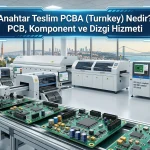
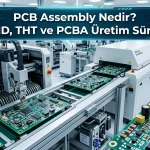
First, PCB production is completed. Then solder paste is applied with the help of a stencil. In the next stage, SMT typesetting machines place the components on the board with high precision. Then the boards are passed through reflow ovens and the soldering process is completed.
After assembly, quality control processes begin. Methods such as AOI, ICT, Flying Probe or functional testing verify the correct operation of the boards. Especially in mass production, these controls are critical for product reliability.
What is SMT Assembly?
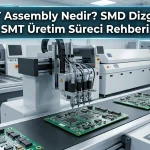
The most widely used method in PCBA production is SMT Assembly, i.e. Surface Mount Technology.
In this method, components are placed directly on the PCB surface. It is faster, more compact and more suitable for high-volume production than traditional through-hole assembly methods.
Today, most of the boards produced from consumer electronics to industrial systems are assembled using SMT technology. (Reddit)
Especially in modern designs with high component density, SMT assembly has now become the industry standard.
Why Electronic Board Assembly is a Critical Process?
Electronic board assembly is one of the stages that directly affects product performance. Even a PCB with perfect design can malfunction due to improper assembly.
Component layout accuracy, solder quality, temperature profiles and test processes have a major impact on product reliability.
Therefore, not only PCB quality but also the quality of the assembly process must be evaluated in electronic board production. Especially in industrial products, medical devices and automotive electronics, assembly errors can lead to serious costs.
What Should Be Considered When Getting PCB Assembly Service?
When choosing a PCBA production partner, it is not enough to evaluate price alone.
Production capacity, SMT line infrastructure, quality control processes, component supply management and test facilities should be evaluated together.
In addition, companies that can manage the transition from prototype production to mass production have a significant advantage in the long run. This is because technical support on the manufacturer's side during product development processes can directly affect both costs and production times.
Conclusion
Although the terms PCB and PCBA are often used together, they refer to different stages in the electronics manufacturing process. The PCB represents the blank circuit board, while the PCBA is the electronic board with all components assembled and made operational.
The performance of a product depends not only on PCB design but also on PCBA production quality. For this reason, the right production infrastructure, quality typesetting processes and effective test methods are of great importance in electronic board assembly processes.
As Elektroent, we manage PCB assembly and electronic card assembly processes from prototype to mass production with high quality standards and plan the most suitable production approach for the projects together.
If you want to get detailed information about PCBA production or SMT typesetting processes for your project, you can contact us.
+90 (216) 466 46 37