

MCU (Microcontroller Unit) and MPU (Microprocessor Unit) are two fundamental processor architectures used in electronic and embedded systems. Both handle data processing tasks, but their intended uses, structures, and operating principles are quite different. In particular, the difference between a microcontroller (What is an MCU?) and a microprocessor (What is an MPU?) is critical for selecting the right hardware during electronic product development processes.
What Is an MCU? (Microcontroller)
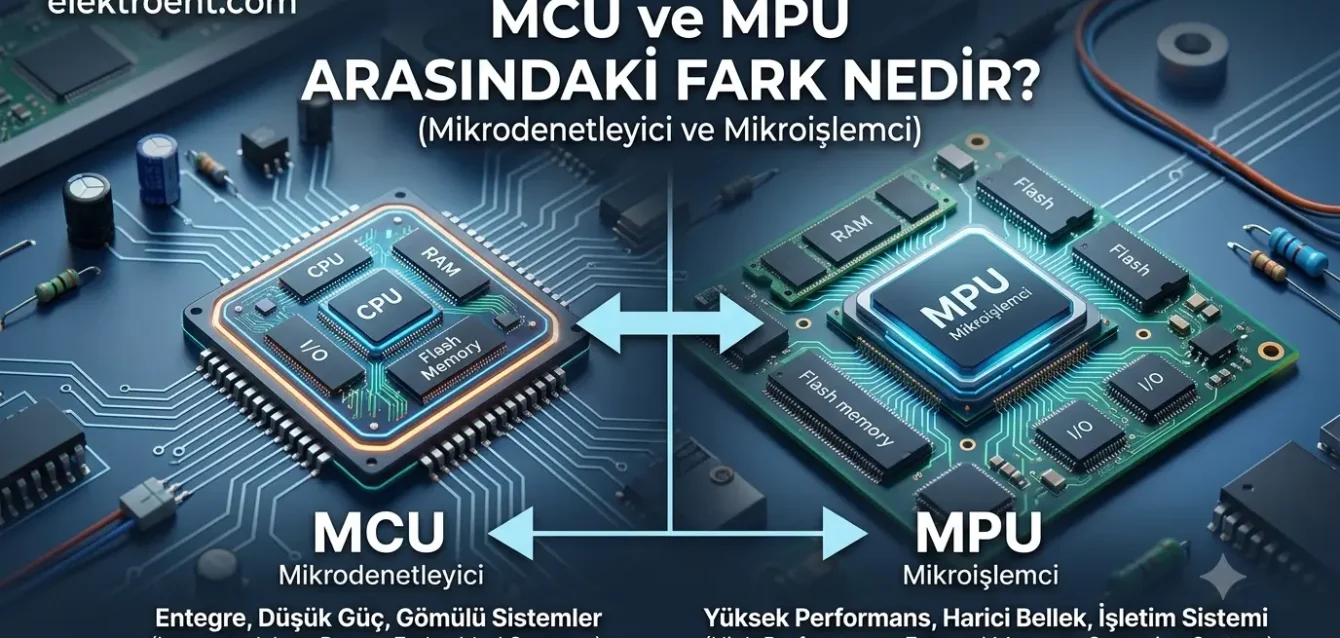
An MCU, or microcontroller, is a compact electronic control unit that integrates a processor (CPU), memory (RAM, ROM/Flash), and input/output units onto a single chip. Microcontrollers are typically designed to perform a specific task and are widely used in embedded systems.
Thanks to their low power consumption, low cost, and real-time capabilities, MCUs are particularly preferred in applications such as home appliances, automotive systems, IoT devices, and industrial control systems. For example, the program control of a washing machine or the data reading of a sensor system is managed directly by an MCU.
What Is an MPU? (Microprocessor)
An MPU, or microprocessor, is a more powerful processing unit consisting solely of a processor core and requiring external memory and peripheral devices to function. Microprocessors are typically used in applications that require higher processing power.
MPUs are preferred in computers, smartphones, tablets, and high-performance industrial systems due to their ability to run operating systems. Operating systems such as Linux or Android typically run on MPU-based systems.
Key Differences Between MCUs and MPUs
The most fundamental difference between an MCU and an MPU is their level of integration and intended use. An MCU integrates all essential components onto a single chip, making it an ideal solution for simpler, low-power systems. An MPU, on the other hand, provides higher performance but requires external components and is used in more complex systems.
Another important difference is their operating principle. While MCUs are generally designed for a single task or limited operations, MPUs are suitable for multitasking and complex software systems. For this reason, MCUs excel in real-time control applications, while MPUs are better suited for applications requiring high processing power.
When Should an MCU Be Used, and When Should an MPU Be Used?
If a project requires low power consumption, low cost, and fast response times, an MCU is the preferred choice. Microcontrollers are the best choice, particularly for sensor-based systems, automation solutions, and embedded devices.
In contrast, MPUs are used in projects that feature a graphical user interface, run an operating system, or require high data processing capacity. Smartphones, tablets, and advanced industrial computers fall into this category.
Conclusion
MCUs (microcontrollers) and MPUs (microprocessors) are the building blocks of modern electronic systems, but their intended uses are completely different. While MCUs are ideal for simple, fast, and low-power systems, MPUs are preferred for applications requiring high performance and complex processing.
Choosing the right MCU or MPU directly affects the performance, cost, and efficiency of an electronic product. If you would like professional assistance in selecting the most suitable microcontroller or microprocessor for your project, please contact us via elektroent.com.